Do Home Saunas Require Special Plumbing? What to Know
Table of Contents
- Do Home Saunas Require Special Plumbing? The Short Answer
- Dry Sauna vs. Steam Room: Which One Needs a Water Line?
- Does a Sauna Need a Floor Drain?
- Home Sauna Electrical Requirements: The Bigger Installation Concern
- Indoor Sauna Ventilation Requirements and Moisture Control
- Sauna Installation Permits and Local Code
- Water, Buckets, and Stones: Managing Moisture Without a Plumber
- Frequently Asked Questions
Last Updated: October 20, 2026
Do Home Saunas Require Special Plumbing? The Short Answer
No, most home saunas do not require special plumbing. A traditional dry sauna, an infrared sauna, and a barrel or cabin sauna all run without a water line, drain, or plumber.

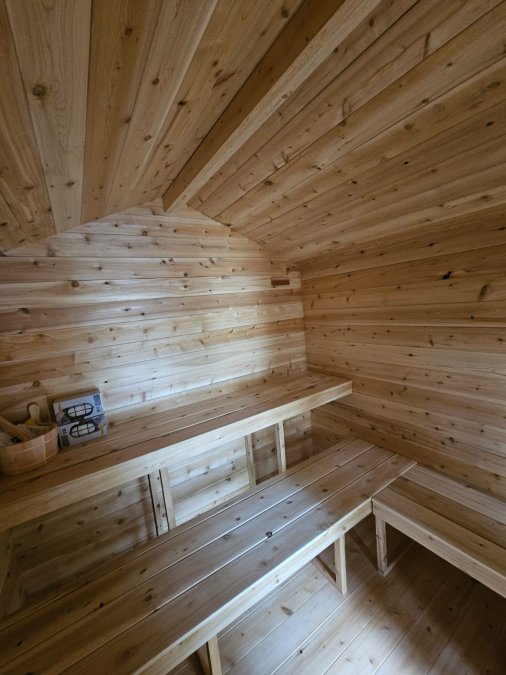
The short answer is that home saunas are an electrical project, not a plumbing one. The heater is the real installation question.
Most buyers budget for a plumber they never needed, then get surprised by the electrician bill they did.
Dry Sauna vs. Steam Room: Which One Needs a Water Line?
A dry sauna needs no water line. A steam room does. That single difference decides most of your installation plan.
A dry sauna is a wood-lined room heated by an electric heater or infrared panels. You sit in dry heat, and the room stays well under steam-room humidity.
A steam room is a sealed, tiled chamber filled with visible steam. It needs a steam generator, a water supply line, and a drain.
Where a Steam Generator Fits In
A steam generator is a small boiler unit that turns water into steam and pipes it into the room. It needs three things a dry sauna never does:
- A cold water line feeding the unit
- A drain for condensate and flushing
- A nearby power feed, often hardwired
Most steam generators sit in a closet or vanity cabinet within a short pipe run of the shower. That is a real plumbing job, with a real plumber.
So if your question is whether a home sauna needs special plumbing, the honest answer depends on which room you are actually building.
Does a Sauna Need a Floor Drain?
A dry sauna does not need a floor drain. A steam room does, and so does any sauna where you plan to splash a lot of water on the stones. The real question is whether skipping one creates a maintenance burden you will regret.
Floor drainage is the most misunderstood part of the sauna installation conversation:
| Setup | Floor drain needed? | Why |
|---|---|---|
| Infrared sauna | No | No water used, minimal sweat |
| Traditional dry sauna, light water use | Usually no | Towel-dry the floor after use |
| Traditional sauna, heavy löyly (water on stones) | Recommended | Standing water and splash |
| Steam room | Yes | Condensate and cleaning water |
| Outdoor sauna on a slab | Recommended | Rain, snowmelt, and splash |
Skip a drain in a wet room and you are relying on waterproof flooring and a mop, it works, but means more maintenance.
The Decision Tree: When to Add a Drain
Use this framework to decide whether a drain is worth the added cost and complexity:
- Is the sauna indoors on a wood subfloor? If yes, a drain is rarely necessary for a dry sauna. Use a waterproof mat or tile and wipe up standing water promptly.
- Will you use water on the stones more than once a week? If yes, a drain or a sloped floor with a central drain is worth considering. Heavy löyly creates persistent moisture that can warp flooring and promote mold.
- Is the sauna in a basement or on a concrete slab? A drain is easier to add during construction than after. If you are finishing a basement, rough-in a drain now even if you plan a dry sauna, future you may thank you.
- Are you building a steam room? A drain is mandatory. Steam generators produce condensate and require flushing, and local plumbing code will expect a drain connection.
- Is the sauna outdoors? An outdoor sauna on a slab benefits from a drain to handle rain, snowmelt, and splash. A simple trench drain or a sloped slab directing water away from the structure is often enough.
Retrofitting a Drain vs. Managing Moisture Without One
A drip pan under a steam generator or a wall-mounted heater is a cheap safeguard. It catches small leaks before they reach your subfloor.
A drain reduces daily maintenance and protects your structure, but adds upfront cost and complexity. For light water use, a towel and a waterproof mat are usually enough. For heavy use or a steam room, a drain is not optional.
Home Sauna Electrical Requirements: The Bigger Installation Concern
Electrical work, not plumbing, is where most home sauna projects get complicated. Heaters pull serious power, and many need a dedicated circuit.
Here is what to plan for:
- Dedicated circuit: Most electric sauna heaters should run on their own breaker, not a shared household circuit.
- Voltage: Small infrared units often run on 120V. Larger traditional heaters typically need 240V.
- Amperage: A bigger heater means a bigger breaker. Match the breaker to the heater's rated load.
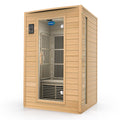
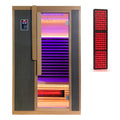
Our 2-Person Carbon Infrared Sauna is a good example of the simpler path. It runs on 120V at 1700 watts and needs no special wiring. That makes it a realistic option for a spare room or finished basement.
Hardwired vs. Plug-In Heaters
A plug-in heater connects to a standard outlet and is the easier route. A hardwired heater connects directly to your electrical panel through a junction box.
Plug-in units suit smaller infrared saunas and lower power draws. Hardwired units suit larger traditional saunas with 240V heaters.
The trade-off is simple. Plug-in is faster to set up. Hardwired gives you more heating power and a cleaner install. Neither one involves plumbing.
Indoor Sauna Ventilation Requirements and Moisture Control
Ventilation is how you manage moisture in a dry sauna without a drain. Airflow carries humid air out and keeps the wood dry.
2-Person Carbon Infrared Sauna - Canadian Hemlock Wooden Sauna - 1700 Watts →
Most indoor saunas benefit from two vents: a low intake near the heater and a high exhaust on the opposite wall. That setup lets fresh air enter, heat evenly, and humid air escape.
Practical moisture habits that save your floor and frame:
- Wipe benches and the floor after every session
- Prop the door open for 20-30 minutes to dry the room
- Leave a towel on the floor where you step out
Ventilation also protects the heater. Trapped humid air shortens the life of electrical components.
Sauna Installation Permits and Local Code
Permits vary by city and county, so check with your local building department before you start. Most dry sauna installs need little beyond an electrical permit, but preparation saves you from failed inspections or costly rework.
What Usually Triggers a Permit
- New dedicated electrical circuits
- Structural changes to a room
- Adding a steam generator with new plumbing
What Usually Does Not
- Assembling a freestanding infrared sauna in an existing room
- Plugging a 120V unit into an existing outlet
How to Verify Requirements in Your Jurisdiction
Building codes are adopted and amended at the state and local level, so the same sauna can be regulated differently from one town to the next. A practical checklist:
- Call your local building department. Ask specifically about electrical permits for a sauna heater and whether a plumbing permit is needed if you are adding a drain or water line. Mention the heater's voltage and amperage.
- Ask about the National Electrical Code (NEC) adoption. Most jurisdictions base their electrical code on the NEC, but local amendments can add requirements for dedicated circuits, GFCI protection, or disconnects near the sauna.
- Check waterproofing rules for wet areas. If you are building a steam room or a wet sauna, tile, membrane, and a proper drain fall under local plumbing and building code. Inspectors will look for a sloped floor, a drain connection, and proper waterproofing behind tile.
- Confirm clearances. Keep your heater's installation manual on site. Inspectors often ask for the manufacturer's clearances and wiring specs, and those clearances are part of the listing requirements.
- Ask about ventilation. Some jurisdictions require mechanical ventilation for rooms with fuel-burning appliances or high moisture loads. Even if not required, ventilation protects the structure.
Plumbing Code Basics for Steam Rooms
If your project includes a steam generator, the plumbing work typically falls under the local plumbing code, which is often based on the Uniform Plumbing Code (UPC) or the International Plumbing Code (IPC). Key points inspectors check:
- A backflow prevention device on the water supply line to the steam generator
- A drain connection sized for the generator's condensate and flush requirements
- Proper pipe materials and insulation for hot water and steam lines
A licensed plumber should handle this work. The cost of a plumbing permit and inspection is small compared to the risk of a leak behind a finished wall.
Electrical Code Basics for Sauna Heaters
Sauna heaters are continuous loads, and the NEC treats them accordingly. Most electric sauna heaters require a dedicated circuit sized at 125% of the heater's rated current. For a 240V heater, that often means a 30-amp or larger breaker and properly sized wire.
A licensed electrician should pull the electrical permit and perform the work. Keep the permit and inspection records, they are useful if you sell the home.
Working with Inspectors
Inspectors are a checkpoint that protects your investment. Have your manual, permit, and clearances ready, and ask about requirements before you build, not after, a five-minute phone call can save a week of rework.
Water, Buckets, and Stones: Managing Moisture Without a Plumber
You can enjoy water in a dry sauna without any plumbing.
Here is how to do it cleanly:
- Fill a bucket with lukewarm water before you start.
- Ladle small amounts onto the heated stones, not the heater element.
- Keep total water modest. A few ladles per session is plenty.
- Set the bucket on a tray or towel to catch drips.
- Wipe the floor and benches dry when you finish.
Sauna stones hold heat and release steam evenly. Rinse them occasionally and replace cracked ones.
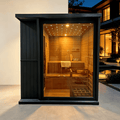
For a traditional heater, our AuroraTherm Cedar Indoor Sauna pairs a 6.5 kW electric heater with genuine Canadian red cedar and tempered glass.

If you want the full ritual with a bucket and ladle included, the Solstice Elite Horizon Indoor Sauna ships with a traditional steam bucket and ladle and a 9 kW heater.

A common mistake is dumping a full bucket at once.
At Cedar Forge Wellness, we build cedar saunas for exactly this kind of install.
Explore the collection at cedarforgewellness.com and set up your home recovery space.
Frequently Asked Questions
Can I plug a sauna into a regular outlet?
Some smaller infrared models can run on a standard 120V household outlet. The 2-Person Carbon Infrared Sauna from Cedar Forge Wellness is a 1700-watt unit rated at 120V and its listing states no special wiring is required. Traditional saunas with larger electric heaters usually need a dedicated 240V circuit and a licensed electrician. Check the heater's voltage and amperage before you buy, and confirm what circuits your home already has.
Does a home sauna need a floor drain?
Most residential dry saunas do not require a floor drain. A traditional sauna where you ladle water onto stones produces some moisture, so a drain or a well-sealed, waterproof floor helps with cleanup. Steam rooms and wet-use installations almost always need drainage. If you plan to pour water regularly, talk to your contractor about a drain or drip pan before installation rather than after.
Can you pour water on sauna rocks without plumbing?
Yes. A bucket and ladle are the traditional method, and no water line is involved. You fill the bucket from a nearby sink or shower and carry it in. The water evaporates off the hot stones and raises humidity for a few minutes. Wipe up drips and let the room dry with the door open afterward. This is normal use in a traditional sauna and does not require a plumbing connection.
Do you need a permit to put a sauna in your house?
Permit rules vary by state and municipality. Many jurisdictions require an electrical permit for a new dedicated circuit or hardwired heater, and some require a building permit for a framed or structurally altered enclosure. A plug-in infrared unit that needs no wiring changes often falls outside permit scope. Call your local building department before installation and ask specifically about electrical and building permits for a residential sauna.