My Luxury Home Spa Alternatives: Top Options
Table of Contents
- Why Home Spa Alternatives Matter
- Premium Indoor Saunas: Heat Therapy at Home
- Luxury Hot Tubs for Small Spaces
- Cold Plunge Tub for Home Recovery
- Red Light Therapy at Home: Skin and Recovery
- Home Spa Maintenance: Keeping Your Equipment Running
- Building Your Home Wellness Sanctuary
- Frequently Asked Questions
Last Updated: October 11, 2026
Why Home Spa Alternatives Matter
Creating a spa experience at home transforms how you approach wellness. Instead of scheduling appointments and traveling to facilities, you can access restorative treatments whenever you need them. Home spa alternatives eliminate the friction of monthly memberships and travel time, letting you build a consistent recovery routine that fits your life.
Daily access to heat therapy, cold exposure, and light-based recovery accelerates results. You control the temperature, timing, and environment, no waiting for appointments.
Below, we'll walk you through effective home spa alternatives available today, from premium saunas to cold plunge options, so you can build the system that matches your actual needs.
Premium Indoor Saunas: Heat Therapy at Home
An indoor sauna is the cornerstone of most home spa setups. Heat therapy improves circulation, supports muscle recovery, and promotes the kind of deep relaxation that spa visits promise. The difference is that you control the experience completely.
Full-spectrum infrared saunas deliver three wavelengths: near infrared for surface healing, mid infrared for deeper circulation and oxygen delivery, and far infrared for detoxification.
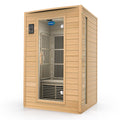
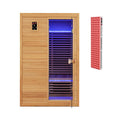
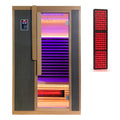
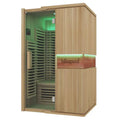
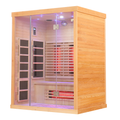
Cedar Forge Wellness offers several premium sauna options designed for home integration. The Blisspod Malmo combines infrared heat with red light therapy in a compact 2-person design, starting at $3,299. For larger families or those seeking maximum therapeutic features, the Blisspod Venetian accommodates three people with 11 heaters, chromotherapy lighting, and reflexology foot heating at $4,999. Both use sustainably sourced Canadian hemlock and feature low EMF heaters.


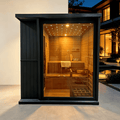
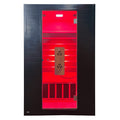
The AuroraTherm Cedar Indoor Sauna represents the premium end, crafted from solid Canadian red cedar with a 6.5 kW electric heater and digital controls at $6,495. It seats 2-3 people and heats rapidly with even temperature distribution.

Luxury Hot Tubs for Small Spaces
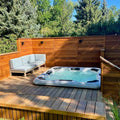
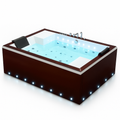
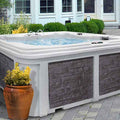
Hot tubs for small spaces solve a real problem: you want hydrotherapy without dedicating your entire backyard to a massive installation. Modern compact designs deliver full therapeutic benefits in footprints that fit most patios, decks, or even indoor spaces.
Hydrotherapy works through jet action and heat. Water jets massage muscles, improve circulation, and reduce inflammation. The warm water temperature (typically 98-104°F) relaxes muscle tension and promotes better sleep when used in the evening. Unlike saunas, hot tubs allow full-body immersion and social relaxation.
Why Compact Models Make Sense for Most Homes
A 2-4 person hot tub fits under an 8×8 ft footprint on standard decks or patios. Compact models feature 8-12 focused jets versus 20+ in larger systems, but deliver comparable therapeutic intensity for solo users or couples.
Who Compact Hot Tubs Are Best For
- Apartment and townhome dwellers with limited outdoor space or shared property restrictions
- Couples and small families (2-4 people) who prioritize daily use over occasional entertaining
- Budget-conscious buyers seeking hydrotherapy without the $8,000-$15,000 price tag of premium full-size models
- Those managing joint pain or muscle soreness who value consistent access over social capacity
- Renters or those in transition who need a system that can be relocated or removed
Compact vs. Standard: The Real Comparison
| Factor | Compact (2-4 person) | Standard (4-6+ person) |
|---|---|---|
| Footprint | 6×6 to 8×8 ft | 8×10 to 10×12 ft |
| Upfront cost | $3,000-$6,000 | $6,000-$15,000+ |
| Monthly operating cost | $20-$30 | $40-$60 |
| Heat-up time | 2-3 hours | 4-6 hours |
| Jet intensity | Focused, adequate for 2-4 users | Distributed, better for groups |
| Water volume | 300-500 gallons | 800-1,200 gallons |
| Chemical maintenance | Frequent adjustments needed | More stable chemistry |
| Deck load capacity | 40-60 lbs/sq ft (check your deck) | 60-100 lbs/sq ft |
Installation and Space Considerations
Cold Plunge Tub for Home Recovery
Cold plunge therapy activates the parasympathetic nervous system, reduces inflammation, and improves cardiovascular function. Cold exposure triggers vasoconstriction followed by vasodilation during warm-up, flushing metabolic waste and improving oxygen delivery.
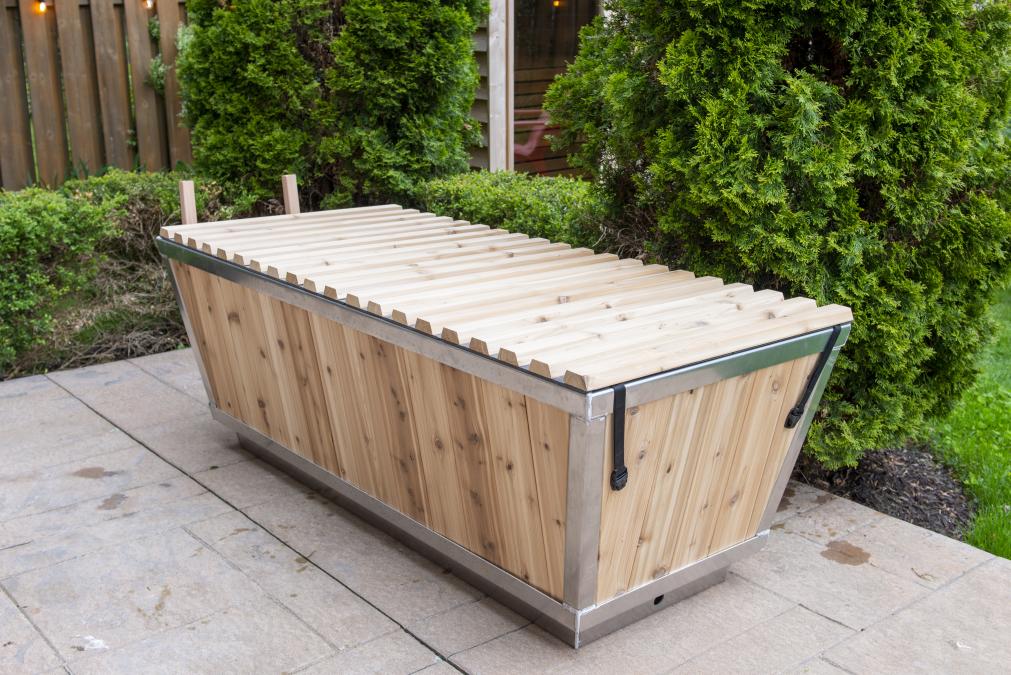
Home cold plunge tubs enable contrast therapy when paired with sauna sessions. Most users start with 1-3 minute immersions at 50-60°F and gradually extend duration. Cedar Forge Wellness stocks cold plunge systems with digital temperature displays, insulated construction, and filtration for easy maintenance.
Red Light Therapy at Home: Skin and Recovery
Red light therapy uses 600-700 nanometer wavelengths to penetrate skin and shallow muscle tissue without burn risk.
What Red Light Therapy Is Supported For
Skin health and appearance: Red light stimulates collagen and elastin production.
Muscle recovery and exercise-induced soreness: Red light therapy reduces muscle soreness.
Blisspod | Venetian | Full Spectrum Indoor Premium Canadian Hemlock Ultra Low →
Wound healing and minor skin irritation: Red light accelerates healing of minor cuts and abrasions.
What Red Light Therapy Is Uncertain or Overstated For
What Red Light Therapy Cannot Replicate
Red light therapy complements but does not replace sauna heat therapy, cold plunge contrast therapy, or massage.
Practical Use for Home Red Light Therapy
Standalone red light therapy beds or panels are effective but require dedicated space and time. Many users find greater value in integrated systems: premium saunas now pair full-spectrum infrared with red light panels, allowing you to combine heat and light therapy in one 20-30 minute session. This multi-modal approach addresses more recovery pathways simultaneously than red light alone.
Typical protocols:
- Skin health: 10-20 minutes, 3-5 times per week, positioned 6-12 inches from the face
- Muscle recovery: 10-15 minutes post-workout, 3-4 times per week, targeting affected muscle groups
- General wellness: 15-20 minutes, 2-3 times per week
Consistency matters more than duration. Regular exposure over weeks produces better results than sporadic long sessions. Most users notice subtle improvements after 4-6 weeks and more pronounced changes after 8-12 weeks of consistent use.
Integration Into Your Home Spa
If your primary goals are muscle recovery and general wellness, red light therapy is best viewed as an enhancement to a sauna or hot tub routine rather than a standalone system. If skin health and anti-aging are your focus, a dedicated red light bed or panel used consistently 3-5 times weekly will deliver measurable results over time. The key is matching the tool to your actual priority and maintaining realistic expectations about what it can and cannot do.
Home Spa Maintenance: Keeping Your Equipment Running
Proper maintenance extends equipment lifespan and ensures consistent performance. Saunas and cold plunge systems each require different care approaches.
For saunas, daily maintenance is minimal. Wipe down benches and glass doors after use to remove moisture and salt residue. Weekly, sweep the interior floor. Annually, inspect heating elements and wood condition. Cedar and hemlock naturally resist moisture and decay, but ventilation prevents mold growth, ensure your sauna has adequate airflow.
Cold plunge systems need clean water to prevent algae and bacterial growth. Use a combination of filtration and UV sterilization. Drain and refill every 1-2 weeks depending on usage frequency. Check temperature sensors regularly to ensure accurate readings.
| Equipment | Daily Care | Weekly Care | Monthly Care | Annual Care |
|---|---|---|---|---|
| Sauna | Wipe benches/glass | Sweep interior | , | Inspect heaters |
| Hot Tub | , | Test chemistry | Clean filters | Drain/refill |
| Cold Plunge | Monitor temp | Check filtration | Replace filters | Deep clean |
| Red Light Bed | Wipe surface | Check connections | , | Inspect bulbs |
Building Your Home Wellness Sanctuary
A complete home spa doesn't require every option. Start with one or two core pieces that match your primary wellness goal. If muscle recovery dominates your focus, begin with a sauna. If you're managing chronic inflammation, prioritize a cold plunge tub. If skin health and anti-aging matter most, add red light therapy to your routine.
The most successful home spa setups evolve over time. You add equipment as your wellness priorities shift and your budget allows. Cedar Forge Wellness carries the full range of premium equipment needed to build exactly the sanctuary you want, from compact saunas that fit apartments to complete recovery systems for dedicated wellness rooms.
Building a home spa alternative means reclaiming time and control over your recovery routine. We offer premium saunas with quick heat-up times, cold plunge tubs for contrast therapy, and red light therapy options, all with free shipping within the Continental U.S. Explore the Collection and discover how to transform your daily routine into a sanctuary of genuine restoration.
Frequently Asked Questions
What are the best home spa alternatives if I don't have space for a full installation?
Compact infrared saunas and red light therapy panels are ideal space-efficient alternatives. The Blisspod Malmo sauna ($3,299) fits into tight spaces while delivering full infrared and red light benefits. Cold plunge tubs also work well in limited square footage. Focus on equipment that delivers multiple wellness benefits in one unit to maximize your investment in a smaller footprint.
Is a home sauna a good alternative to visiting a spa or hot tub regularly?
Yes. Home saunas eliminate monthly membership costs and travel time while delivering consistent heat therapy benefits. Full-spectrum infrared saunas like the Blisspod Venetian ($4,999) provide improved circulation, pain relief, and detoxification, the same benefits you'd get at a professional spa. You control the temperature, duration, and frequency, making daily use realistic and sustainable for long-term wellness.
How do I know which home spa alternative will actually get used regularly?
Choose equipment that fits naturally into your routine. If you value quick recovery after workouts, a cold plunge works best. If stress relief is your goal, a sauna with chromotherapy is ideal. Start with one primary piece, like the AuroraTherm Cedar Sauna ($6,495), rather than spreading investment across multiple options. Location matters too: place equipment where you'll see it daily, not in a basement you rarely visit.
What is the difference between full-spectrum and standard infrared saunas for home use?
Full-spectrum saunas deliver near, mid, and far infrared wavelengths. Near infrared promotes skin healing and revitalization at the surface. Mid infrared penetrates soft tissue to increase circulation and oxygen delivery to injured areas. Far infrared reaches fat cells for deeper detoxification and metabolism support. Standard saunas typically offer only far infrared. Full-spectrum options like the Blisspod Bergen ($4,999) provide broader therapeutic benefits in one session.