LightStim vs Alternative Therapy Beds: 2026 Comparison
Table of Contents
- LightStim vs Alternative Therapy Beds: What Actually Differs
- Quick Comparison: Full-Body LED Therapy Beds Side by Side
- The Benefits of Red Light Therapy Beds and What Drives Them
- Red Light Therapy Bed Treatment Time: What a Real Session Looks Like
- LED Therapy Bed vs Red Light Panel: Coverage, Cost, and Convenience
- Red Light Therapy Bed Safety: Eye Protection, Contraindications, and FDA Clearance
- Total Cost of Ownership: Purchase Price, Maintenance, and Value for Money
- Which Bed Fits Your Space and Routine?
- Frequently Asked Questions
Last Updated: October 13, 2026
LightStim vs Alternative Therapy Beds: What Actually Differs
The LightStim vs alternative therapy beds question comes down to one thing: LightStim built its reputation on handheld and panel-style LED devices, while full-body therapy beds wrap you in light from every angle. At Cedar Forge Wellness, we sell full-body red light therapy beds, so we have a clear bias here. We will flag it and give you the honest breakdown anyway.
A panel treats the surface facing it. A bed treats the whole body at once. That difference drives everything else: session time, coverage, cost, and how often you will actually use it.
Quick Comparison: Full-Body LED Therapy Beds Side by Side
The query "LightStim vs alternative therapy beds" usually gets answered with a bed-versus-panel explainer that never names LightStim's actual format.
Here is how the formats line up on the specs that actually decide results.
| Spec | LightStim-style handheld/panel | Full-body LED bed (typical) |
|---|---|---|
| Coverage per session | One localized area at a time | Whole body, front and back simultaneously |
| Wavelengths | Red and near-infrared LEDs, typically in the 630-660 nm and 810-850 nm windows | Dual-spectrum arrays at 630-660 nm red and 810-850 nm near-infrared |
| Irradiance | Lower, because the device sits close to the skin and is held in place | Up to 110-120 mW/cm² at the canopy surface |
| Session time | Several minutes per spot, repeated across the body | 10-20 minutes total |
| Repositioning | Required, often every few minutes | None |
| Footprint | Drawer or countertop | Dedicated room or large open area |
| Power draw | Low | Higher, runs on standard household current |
| Best fit | Spot treatment, travel, entry point | Full-body routine, hands-off sessions |
The three full-body beds we carry show how the bed category itself splits by diode count, irradiance, and canopy mechanism.
| Model | LED Diodes | Irradiance | Session Timer | Canopy Mechanism |
|---|---|---|---|---|
| LumiThera ProLux 360 | 10,240 | Up to 120 mW/cm² | 1-20 min | Height-adjustable lift column |
| SeekPretty RadianceArc 900 | 9,600 | Up to 110 mW/cm² | 1-20 min | Soft-close assisted canopy |
| Sea Star HeliosPro 600 | 12,000 | Up to 120 mW/cm² | 1-20 min | Fully enclosed clamshell capsule |
All three use dual-spectrum arrays at 630-660 nm red and 810-850 nm near-infrared, and all three carry a 5-year warranty on frame and LEDs.

The canopy mechanism separates them in daily use. The ProLux 360's lift column lets you set treatment distance, which changes the dose at the skin surface. The RadianceArc 900 trades adjustability for a soft-close lid.
The Benefits of Red Light Therapy Beds and What Drives Them
Red light therapy beds deliver their benefits by dosing large areas of skin and muscle at once. A panel forces you to reposition every few minutes. A bed does not.
The commonly cited benefits fall into a few buckets:
- Skin health and tone, including collagen production support
- Muscle recovery and reduced inflammation after training
- Pain relief for stiff joints and sore tissue
- Sleep and mood support, which is a newer area of interest
The mechanism behind these claims is photobiomodulation, where red and near-infrared light interact with mitochondrial function in cells. The honest caveat: evidence quality varies a lot by claim, and skin and recovery research is more mature than some emerging areas.
Wavelength and Irradiance: The Two Specs That Decide Results
Wavelength determines how deep light penetrates; irradiance determines how much power reaches the surface. Red light at 630-660 nm works on surface tissue, while near-infrared at 810-850 nm penetrates deeper, which is why recovery and pain claims lean on it. A device with only red LEDs is doing half the job.
Irradiance is measured in mW/cm². Higher numbers mean shorter sessions to reach a target dose, but uniform coverage matters just as much. A 120 mW/cm² hotspot in the center of a panel with dim edges delivers an uneven dose.
Red Light Therapy Bed Treatment Time: What a Real Session Looks Like
A typical full-body session runs 10 to 20 minutes, three to five times per week. The exact number depends on your device's irradiance and your target dose.
Here is how a session actually goes with a bed like the LumiThera ProLux 360:
- Set the canopy height for your treatment distance
- Choose a preset program on the touchscreen
- Set the timer, usually 10-20 minutes
- Lie down and let the arrays run
- Wipe down the surfaces when you are done
No repositioning, no holding a device, you can read or listen. Compare that to a panel, where you flip every few minutes to cover front and back. That friction is why panel owners often drift out of the habit.
LED Therapy Bed vs Red Light Panel: Coverage, Cost, and Convenience
An LED therapy bed beats a panel on coverage and convenience. A panel beats a bed on price and storage. That is the trade in one sentence.
Coverage is the biggest gap. A bed's dual-array design treats the upper and lower body simultaneously; a panel covers one side at a time, meaning two or three cycles per session.
Cost runs the other direction. Panels are the entry point to LED therapy. Beds are a different category of purchase, closer to a piece of furniture than a gadget.
Space is the third factor. A bed needs a dedicated room or a large open area. A panel can lean against a wall or slide under a bed.
Red Light Therapy Bed Safety: Eye Protection, Contraindications, and FDA Clearance
Red light therapy bed safety comes down to three things: eye protection, knowing your contraindications, and understanding what FDA clearance actually means.
SeekPretty RadianceArc 900 Red Light Therapy Bed →
Eye protection first. Bright LED arrays are uncomfortable to stare into directly, and most protocols call for protective eyewear. This is not optional inside an enclosed capsule.
Contraindications matter more than most buyers realize. Talk to your doctor before using any light therapy device if you:
- Take photosensitizing medications
- Have a history of skin cancer
- Are pregnant
- Have a condition that makes you sensitive to heat or light
FDA clearance is the third piece, and it is where marketing gets loose. A device can be cleared as a general wellness product without any claim of treating a disease. That is a real distinction. General wellness clearance is not the same as clearance to treat a medical condition, and sellers who blur the two are not doing you any favors.
Total Cost of Ownership: Purchase Price, Maintenance, and Value for Money
Purchase price is the smallest part of the real cost. Electricity, calibration, consumables, and lifespan determine what a full-body bed costs per session.
Electricity. A full-body bed draws more than a handheld wand but far less than a sauna or hot tub.
Calibration. LED output degrades slowly over years.
Routine upkeep. The daily and weekly work is light:
- Daily: wipe the canopy, deck, and handle with a non-abrasive disinfectant
- Weekly: vacuum the intake and exhaust vents, check hinges and casters
- Annually: electrical safety inspection and LED output calibration
Warranty coverage. The beds we carry include 5 years on frame and LEDs and 3 years on electronics and controller, covering the expensive failure points.
Lifespan. A well-maintained full-body bed is a long-horizon purchase, closer to a home sauna than a gadget.
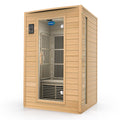
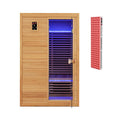
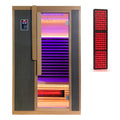
If you want a lower entry point into light therapy plus heat, an infrared sauna with a red light panel built in costs a fraction of a bed. The National Center for Complementary and Integrative Health overview of light therapy is a useful starting point for understanding what the research does and does not support.
Which Bed Fits Your Space and Routine?
Match the bed to your room and your habit, not the spec sheet. The best device is the one that fits where you will actually use it.
Here is how we would choose among the three:
- LumiThera ProLux 360 ($54,999.99) if you want adjustable treatment distance and the lowest price of the three. The lift column lets you tune canopy height, which matters if you want to control dose by distance.
- SeekPretty RadianceArc 900 ($58,999.99) if you want the simplest daily ritual. The soft-close assisted canopy and side handle make it easy to get in and out, and the 9,600 diodes deliver uniform whole-body dosing.
- Sea Star HeliosPro 600 ($62,999.99) if you want the most enclosed, spa-like experience and the highest diode count at 12,000. The capsule shell feels the most like a clinic.
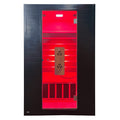
One more option: if you are not ready to commit a full room to a bed, the Blisspod sauna series pairs infrared heat with a front-facing red light therapy panel for a fraction of the cost.

Building a home wellness routine is a real commitment, and the equipment decision is only the first step. If you want a full-body red light therapy bed that fits a home rather than a clinic, we can help you pick the right model for your space.
Frequently Asked Questions
How does a LightStim bed compare with other red light therapy beds?
LightStim is best known for small, targeted LED devices rather than full-body beds, so a direct bed-to-bed comparison comes down to specs. Full-body beds like the SeekPretty RadianceArc 900 run 9,600 diodes at 630-660 nm red and 810-850 nm near-infrared with up to 110 mW/cm2 irradiance, while the LumiThera ProLux 360 steps up to 10,240 diodes at up to 120 mW/cm2. Compare diode count, wavelength, irradiance, coverage, and warranty before deciding.
What should you compare when choosing an LED therapy bed?
Start with wavelength (red at 630-660 nm and near-infrared at 810-850 nm cover most skin and recovery goals), then irradiance, since higher output shortens session time. Check coverage: a 360-degree dual-array design treats front and back in one session, while a single panel leaves you flipping. Also weigh dimensions, power requirements (these beds run 220-240 V), cooling, hygiene surfaces, and warranty terms before you buy.
How often should you use a red light therapy bed?
Most full-body bed programs are built around short, frequent sessions rather than long ones. The SeekPretty RadianceArc 900 and LumiThera ProLux 360 both cap sessions at 1-20 minutes with preset programs, and consistent use several times per week is the typical routine. Follow the manufacturer's protocol for your chosen bed and give your skin a baseline adjustment period during the first two weeks.
Can you use a red light therapy bed at home?
Yes. Home beds are self-contained systems that plug into a dedicated circuit, and most require no plumbing or renovation. Plan for the footprint: the Sea Star HeliosPro 600 measures 230 cm long, and the LumiThera ProLux 360 stands 180 cm tall with its canopy raised. You need roughly the floor space of a small daybed plus clearance to open the canopy and move it on casters.
What safety steps matter most with a red light therapy bed?
Wear the eye protection supplied with the bed, since near-infrared light at 810-850 nm is invisible and still reaches the retina. Check for FDA clearance on the device, keep sessions within the programmed timer, and skip use over active skin infections or suspicious lesions. If you take photosensitizing medication or are pregnant, clear it with your physician first. Wipe the acrylic panels and touchpoints after every session.